Mon–Fri: 6 AM–10 PM, Sat–Sun: 8 AM–10 PM(956) 505-5518
E&M Brownsville Concrete and MasonryE&M Brownsville Concrete and Masonry

Walkway construction in Brownsville TX - a level walk built on a solid base

Cracked, sinking or muddy path to your door? We build concrete and paver walks on a solid base, built to stay flat and tight.

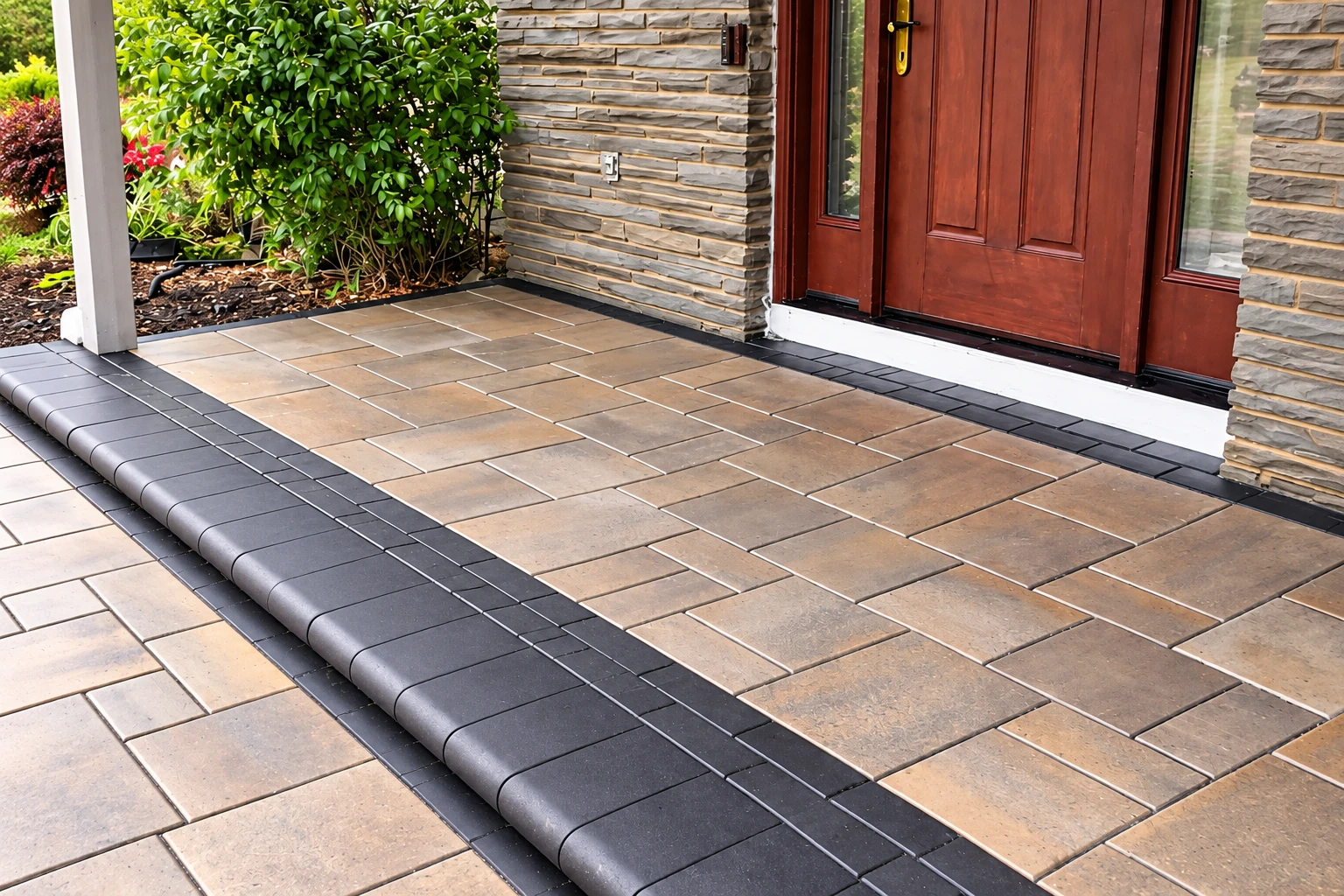
A tan paver walkway with a dark raised border leads to a red front door beside a stone-clad wall.

Should your new walk be concrete or pavers?

Walkway construction in Brownsville, TX means building a path of poured concrete or interlocking concrete pavers on packed ground, and either one can hold up for a long time when the base under it and the finishing work on top are done right.

Most folks who call have a front walk that's cracked and lifting, stepping stones sinking into the lawn, or a dirt track worn to the door. For a plain path to the front door I usually steer people to concrete, because it's one solid slab with nothing to come loose. Pavers make sense when you want the look or a pattern, and a cracked one can be pulled and swapped without breaking up the whole walk, but they take more labor and need edges that hold them tight.

The price moves with the size of the walk, the material you pick, how much old concrete and dirt has to come out and how much base the ground needs. The schedule turns on the weather for a pour and on whether any of the walk reaches city property. I'll look at it in person, and you get a written price for the work we talked about.

What happens after you call us about a walk?

I learned this trade under an old-school mason who made me tear out any joint that wasn't right, and I started this business in Brownsville in 2023. Here's how a walkway job goes with us.

I come look at it myself

I'm the one who comes out, walks the path with you and asks what you've been seeing, whether it's puddles, trip edges or a slab that's sinking. You get a written price for the work we talked about, so you can hold it up against other bids.

We check what the city wants first

If you go ahead, we find out what the city or county office for your property asks for on a walk before anyone digs. When a permit's needed, we pull it and call for the inspections.

Our own crew, with me on site

Our own crew does the work, I'm there running it, and we're licensed and fully insured. When it's done I walk the finished job with you. Satisfaction guaranteed.

How we do walkway construction so it lasts

We lay out the walk, dig it out to firm ground and pack the soil down hard. Concrete can sit right on packed dirt, but a layer of compacted gravel under it gives the slab more even support and bridges the small soft spots in the ground, so ask whether any quote you get includes that layer. On a poured walk we set forms, pitch the surface slightly so rain runs off, pour and finish it, and start curing as soon as the finishing's done, because on a sunny, windy or warm day the top can dry out fast and end up weaker. On a paver walk we spread a smooth bed of sand over the base, lay the pavers tight and lock them in with an edge that holds, since pavers that drift apart start rocking and sinking.

A walk often ties into other work in the yard. If you want a low wall along it or a planter at the front step, we can handle the brick wall installation on the same job, and natural stone steps or borders are part of our stone masonry work.

  • Layout, dig-out and removal of the old walk or sod
  • A packed, solid base under every walk, poured or pavers
  • Concrete poured, finished and cured starting right after finishing
  • Paver walks laid tight with edges that hold them in place
  • A slight slope so rain runs off instead of sitting on the walk

How a walk goes in, start to finish

Every walk follows the same order, because a step skipped at the bottom shows up on top later.

  1. Settle the layout and material

    We go over where the walk runs, how wide it should be and where it meets your steps or driveway, and you pick concrete or pavers. A walk wide enough for two people side by side feels a lot better than a skinny one, and it's cheaper to decide that now than to widen it later.

  2. Get lines marked and stake it out

    We have underground lines marked before anyone digs, because a shovel through a gas or water line is a worse problem than any cracked walk. Then we stake the path so you can see where it'll go before anything comes out.

  3. Pour or lay the walk

    Our crew digs out, builds the base and pours or lays the walk the way we described above. We keep the work inside the staked area so the rest of your yard stays put.

  4. Clean up and keep it in shape

    We haul off the old concrete, dirt and forms and rake out the edges so the yard looks right. After that, keep the walk swept and don't let a sprinkler soak the same spot every day.

Get a written price for your new walk

Send us the walk's rough length and width, whether you're leaning toward concrete or pavers and whether it runs out to the city sidewalk, or call (956) 505-5518. Expect a reply within one business day, and then I come out, look it over and give you a free estimate on site. There's no obligation.

(956) 505-5518

Questions about walkways in Brownsville

How long does a concrete walkway last?

A concrete walk lasts about 20 to 40 years on average, according to a Canadian research council, and how well it's built is the biggest factor. A Michigan concrete group's guide adds that a penetrating sealer can go on 30 days after the concrete is placed and usually needs redoing every three to five years.

How much does a new concrete walkway cost?

Across the US, an installed concrete sidewalk usually runs about $12 to $14 per square foot. That's a national figure for plain concrete, so your price moves with the walk's size, tearing out an old walk, how much base the ground needs and whether you go with pavers instead. I'll give you a written price once I've seen the job.

Which Brownsville office issues permits for work that may affect city property?

The city's Real Estate & Right-of-Way branch reviews and issues permits for utility work, driveway access and construction that may impact city property. If your new walk runs out to the public sidewalk or the street, that's the office that handles it.

What edging holds a paver walkway together?

A paver walk needs a solid edge built to hold the pavers in place, because the flat metal or plastic edging sold for flower beds can't keep them tight. Timber isn't recommended either, since it warps and eventually rots, and once the edge gives, the pavers spread and start to rock.

How soon can I walk on a new concrete walkway?

The same Michigan guide says a new walk can be opened to traffic after 7 days of curing, or sooner when testing confirms it has reached its target strength. We'll tell you when yours is ready, and until then keep feet, bikes and mowers off it.

Building walks in Brownsville and nearby cities

In Brownsville, a walk that runs from your door out to the street often crosses public right-of-way at the end, and the city manages the use and upkeep of that space. The city also lists a Sidewalk Ordinance among its adopted codes, so any part of a walk that may impact city property gets checked with the city before we tie into it.

Around Brownsville we see plenty of front walks that were poured thin straight onto dirt and have cracked and settled, along with paver paths that spread because the edging gave out. We're based in Brownsville and do the same work across the Rio Grande Valley cities around it, including San Benito, Harlingen, Los Fresnos and Port Isabel, along with others nearby.

Get your walk measured and priced

Underground lines get marked and any city check gets sorted before we dig, so an early call to (956) 505-5518 or a note through the form gets your walk on the schedule sooner.

If you've got a walk that's cracked, sinking or never got built, tell us about it and I'll come take a look.

Tell us about your project
(956) 505-5518Get an estimate